Loose flange pipe fittings vs. other flange pipe fittings: Comparison of applicable scenarios, costs, and installation difficulties
Dec. 03, 2025
Loose flange pipe fittings, along with butt-weld flanges and threaded flanges, are listed as core connection components for industrial pipelines. Due to differences in structural design, they have distinct focuses in terms of applicable scenarios, cost control, and installation difficulty. Selection must precisely match the working condition parameters, medium characteristics, and actual engineering requirements to achieve the optimal balance between performance and economy.
I. Comparison of Applicable Scenarios
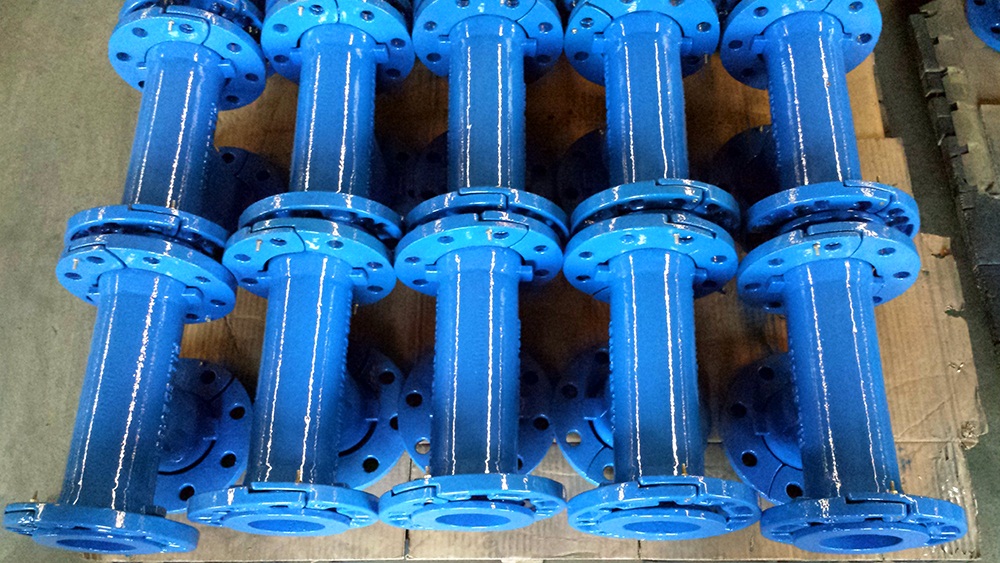
Loose flanges, with their structural advantage of "movable flange rings", are mainly suitable for three scenarios: Firstly, large-diameter pipelines (DN≥500), such as main municipal water supply and drainage pipes, and high-flow medium transportation pipelines in chemical industrial parks. They can effectively alleviate the thermal expansion and contraction stress caused by temperature changes, preventing pipeline deformation and cracking. The second is scenarios that require frequent disassembly, such as reaction systems where equipment maintenance and medium replacement are frequent. Maintenance can be completed without disassembling the entire pipeline. Thirdly, in corrosive medium environments, the flange ring can be made of corrosion-resistant stainless steel, and the pipe body can be made of ordinary carbon steel, taking into account both anti-corrosion effect and cost control.
Butt-weld flanges have balanced sealing performance and load-bearing capacity, and are suitable for medium and high pressure (PN2.5~10MPa) and medium and high temperature (200~450℃) conventional working conditions, such as petrochemical raw material transportation pipelines and process pipelines in oil refining facilities.
Threaded flanges do not require welding. The core is suitable for small-diameter (DN≤100), low-pressure (PN≤1.6MPa) scenarios and special areas where welding is prohibited, such as the inlet end of gas pipelines and small pipeline connections in explosion-proof workshops.
Ii. Cost Variance Analysis
Loose flanges have a prominent cost advantage: only the flange ring needs to be made of high-quality steel in terms of materials, while the pipe body can be made of ordinary materials with lower costs. The material cost is reduced by 20% to 30% compared to integral flanges. Large-diameter models do not require integral forging, have a simple processing technology, and the manufacturing cost is 30% to 50% lower than that of integral flanges.
Butt-weld flanges have a medium cost. Due to the need to ensure the sealing of the weld seam, the processing accuracy requirements are higher than those of loose flanges. The material and processing costs are approximately 1.5 to 2 times those of loose flanges.
Threaded flanges have the lowest cost in small-diameter scenarios, with less material consumption and a simple processing flow. However, when DN exceeds 100, the difficulty of high-precision thread processing increases, and the cost rises rapidly. Their cost performance is far inferior to that of loose flanges.
Iii. Comparison of Installation Difficulty
Loose flanges prioritize installation convenience: the flange ring can rotate freely, facilitating quick alignment of bolt holes without the need for high-precision centering. The welding volume is extremely small (some models do not require welding), and the construction period is 30% shorter than that of integral flanges. It is particularly suitable for operations in narrow Spaces and scenarios requiring frequent maintenance.
The installation requirements for butt-weld flanges are relatively high. They need to be precisely aligned with the pipeline, and the weld gap must be controlled within the specified range. Moreover, flaw detection testing is required, and the welding skills of the construction personnel are strictly demanded.
The installation of small-diameter threaded flanges is highly efficient, requiring only manual tightening to complete the connection without the need for welding equipment. However, for large-diameter models, high-precision thread processing is required, and the sealing performance of the threads needs to be controlled during installation, which significantly increases the difficulty.
Previous: Key Construction Technical Points of Mechanical Joint Fittings
Next: Key Selection Points and Performance Assurance Measures for Express Joint Fittings