Gully Gratings Safety Standards Explained
Apr. 07, 2026
As a key component of urban drainage systems, the safety of gully gratings directly affects the safety of pedestrians and vehicles. Based on years of industry experience and strict adherence to international and national standards, we provide a systematic explanation of safety standards for gully gratings to support standardized design and acceptance for engineering projects.
I. Overview of Core Standards
Our gully grating products strictly comply with European Standard EN124 and Chinese National Standard GB/T 23858. EN124 classifies products into six load classes: A15, B125, C250, D400, E600, and F900, each corresponding to specific application scenarios and load requirements, providing a scientific basis for customer selection.
II. Load Class Selection Guide
Proper selection of load class is the first step in safety design. We recommend determining the load class based on actual application scenarios: Class A15 is suitable for pedestrian-only areas such as green belts; Class B125 is suitable for sidewalks and pedestrian streets; Class C250 is suitable for residential roads and parking lots; Class D400 is suitable for urban roads and highways; Class E600 is suitable for cargo docks and industrial access roads; Class F900 is suitable for airport runways. The selection principle is to determine the load class based on actual vehicle traffic, and we recommend choosing one grade higher to provide a safety margin, ensuring long-term safety.
III. Structural Design Requirements
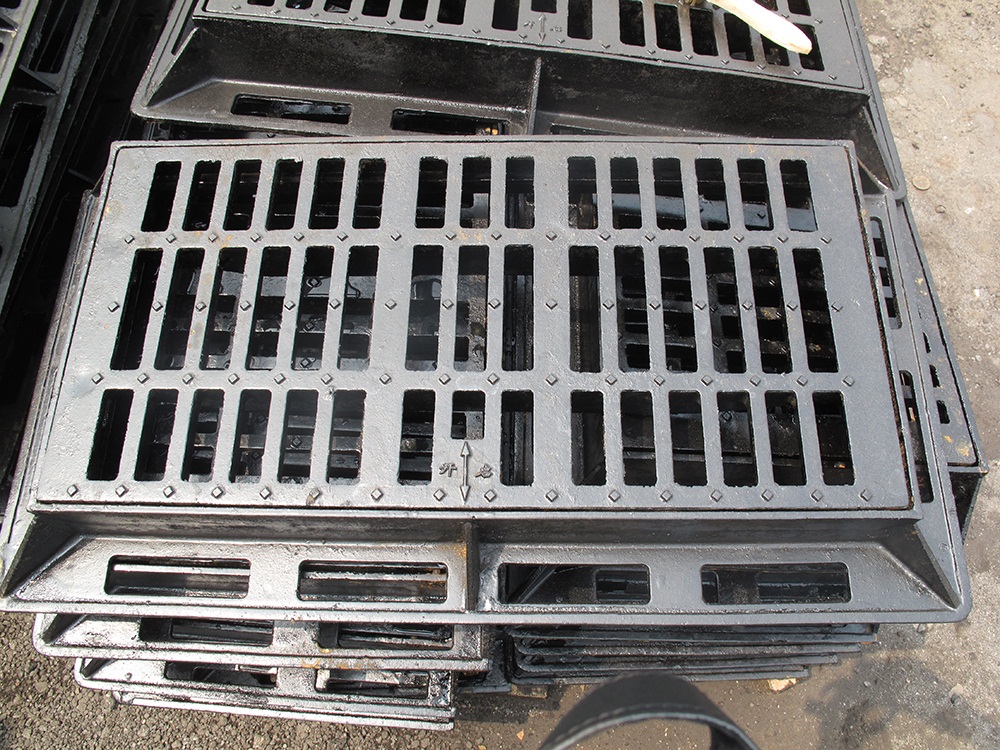
Anti-Slip Design: Our products have anti-slip patterns with a friction coefficient of at least 0.5. The bar spacing is scientifically designed to effectively prevent high heels, bicycle tires, and similar objects from becoming caught, ensuring pedestrian safety.
Anti-Theft Design: Products are equipped with anti-theft locking devices, and composite materials with no scrap value are also available, fundamentally eliminating theft risk.
Anti-Noise Design: Elastic gaskets are installed between the grating and the frame to effectively eliminate rattling noise from passing vehicles, reduce impact damage to the product, and enhance the quality of urban life.
Fatigue Resistance: Products pass at least one million cyclic load tests, ensuring no deformation or fracture due to fatigue during long-term use.
IV. Material Performance Requirements
Our ductile iron gully gratings meet the requirements of tensile strength not less than 400MPa and elongation not less than 10%. Castings undergo residual stress relief treatment, and coatings provide excellent corrosion resistance, passing neutral salt spray tests. Our composite material products also meet corresponding mechanical performance and aging resistance requirements, ensuring long-term stable operation in various environments.
V. Inspection and Acceptance Points
Factory Inspection: Each batch of products undergoes visual inspection, dimensional measurement, weight verification, and load capacity sampling testing, ensuring 100% compliance with standard requirements.
Field Acceptance: After installation, we recommend verifying that the clearance between the grating and frame is even, that the opening is smooth, and that the locking device functions reliably to ensure installation quality.
Previous: Surface Boxes: Secure & Efficient Equipment Enclosures
Next: Round or Square? Manhole Cover Selection Guide